Baseball’s rising costs, steady attendance, and uneven payrolls
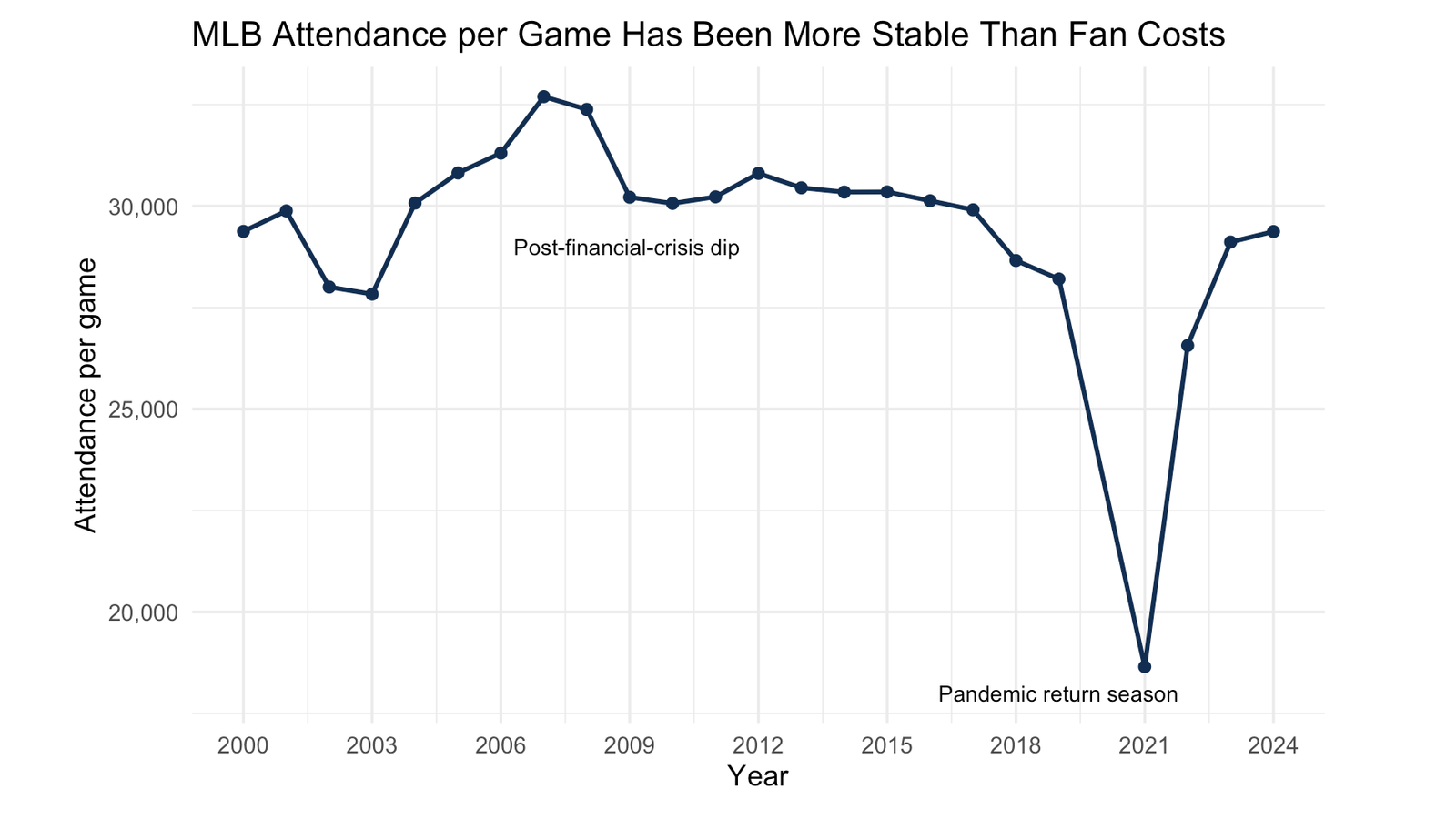
Going to a Major League Baseball game costs much more than it did a generation ago, even after adjusting for inflation. But higher prices do not automatically drive fans away, especially in a market where teams set prices in response to expected demand. Indeed, attendance has not collapsed as tickets have become less affordable; league-wide crowds mostly held in a band of roughly 27,000 to 33,000 per game, dipping most sharply during external shocks like the 2008 financial crisis and the first post-Covid season rather than when fan costs rose fastest. What might matter more to fans is whether they think the product on the field justifies the bill: in Cleveland, attendance fell more sharply when the franchise looked less committed to winning.
Baseball Got More Expensive, But Attendance Stayed Steady
The Fan Cost Index estimates what a family of four would spend on a standard trip to the ballpark, including tickets and common game-day purchases. It is meant to capture the cost of the outing as a whole, not just the price of admission. Real fan costs have increased steadily since 2000; the slight dip recently is primarily a result of high national inflation.
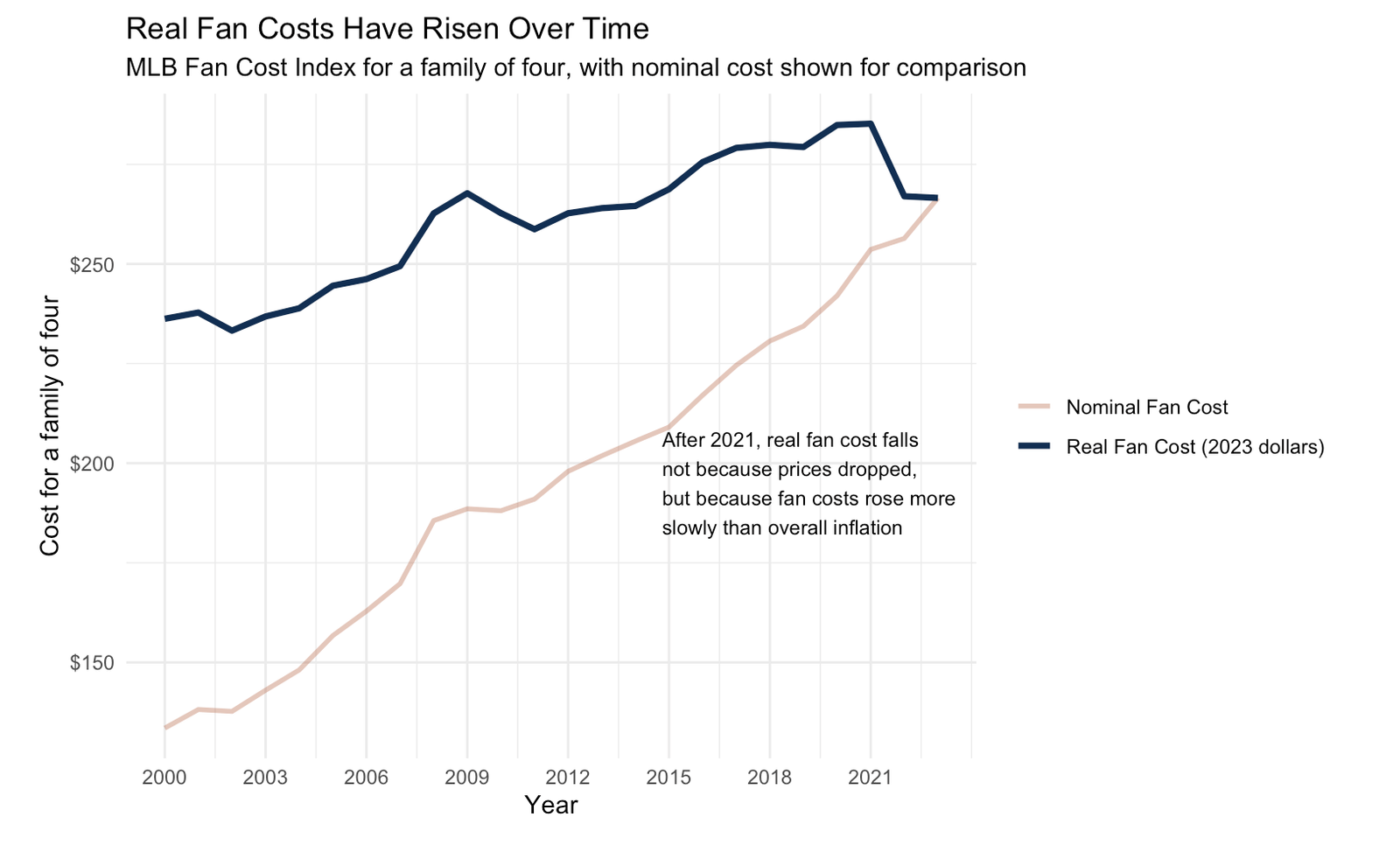
If higher prices were the main force shaping fan behavior, attendance per game should have drifted downward as the cost of attending rose. Attendance data do not show that relationship. Fan costs move steadily upward, but attendance stays within a relatively narrow band for most of the period, with its sharpest declines occurring after the 2008 financial crisis and during the pandemic-era return season. Baseball became less affordable, but attendance did not behave as though price alone was driving the market.
Factors other than price are absorbing the pressure. This dataset cannot fully tell us whether attendance is being sustained by higher-income fans, by promotions and discounts, or by the continued appeal of the live experience.
Cleveland Shows What National Averages Miss
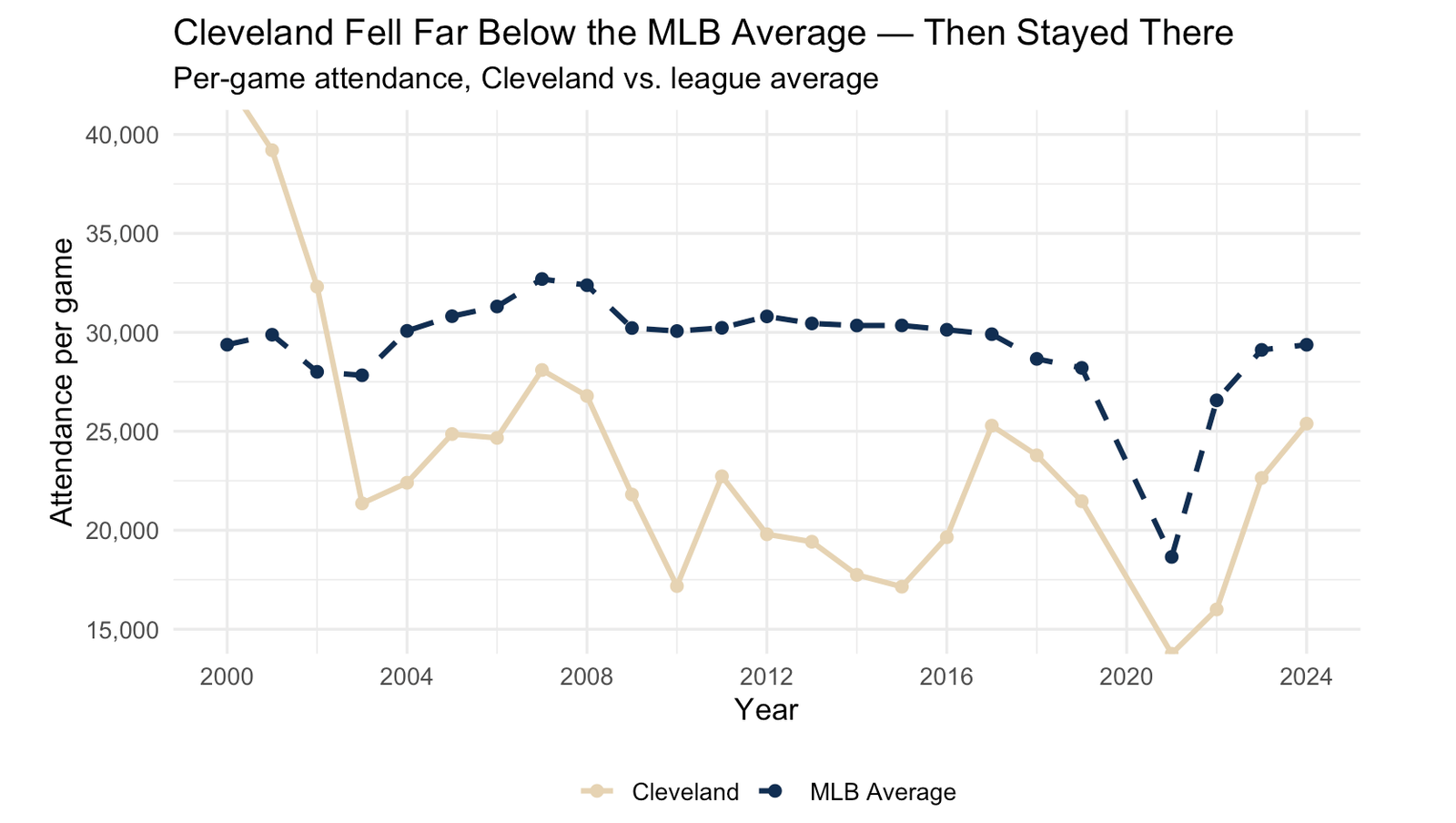
To better understand potential drivers of attendance, it helps to look at one franchise up close. Cleveland started the period drawing crowds above the league average and ended it well below, a reversal that the national numbers entirely obscure. In the early 2000s, the team drew crowds at or above the MLB average. However, attendance dropped sharply and has remained well below the league benchmark since. That divergence points to something specific to the franchise, not the sport.
Payroll Helps Explain Why Cleveland Drifted Away
Fans may be more willing to absorb higher prices when team ownership appears equally willing to invest in winning. The fall in Cleveland’s attendance in the early 2000s coincided with a significant drop in payroll, suggesting that local fan response may have been tied less to the general cost of going to a game than to what the franchise seemed willing to invest towards putting a competitive team on the field.
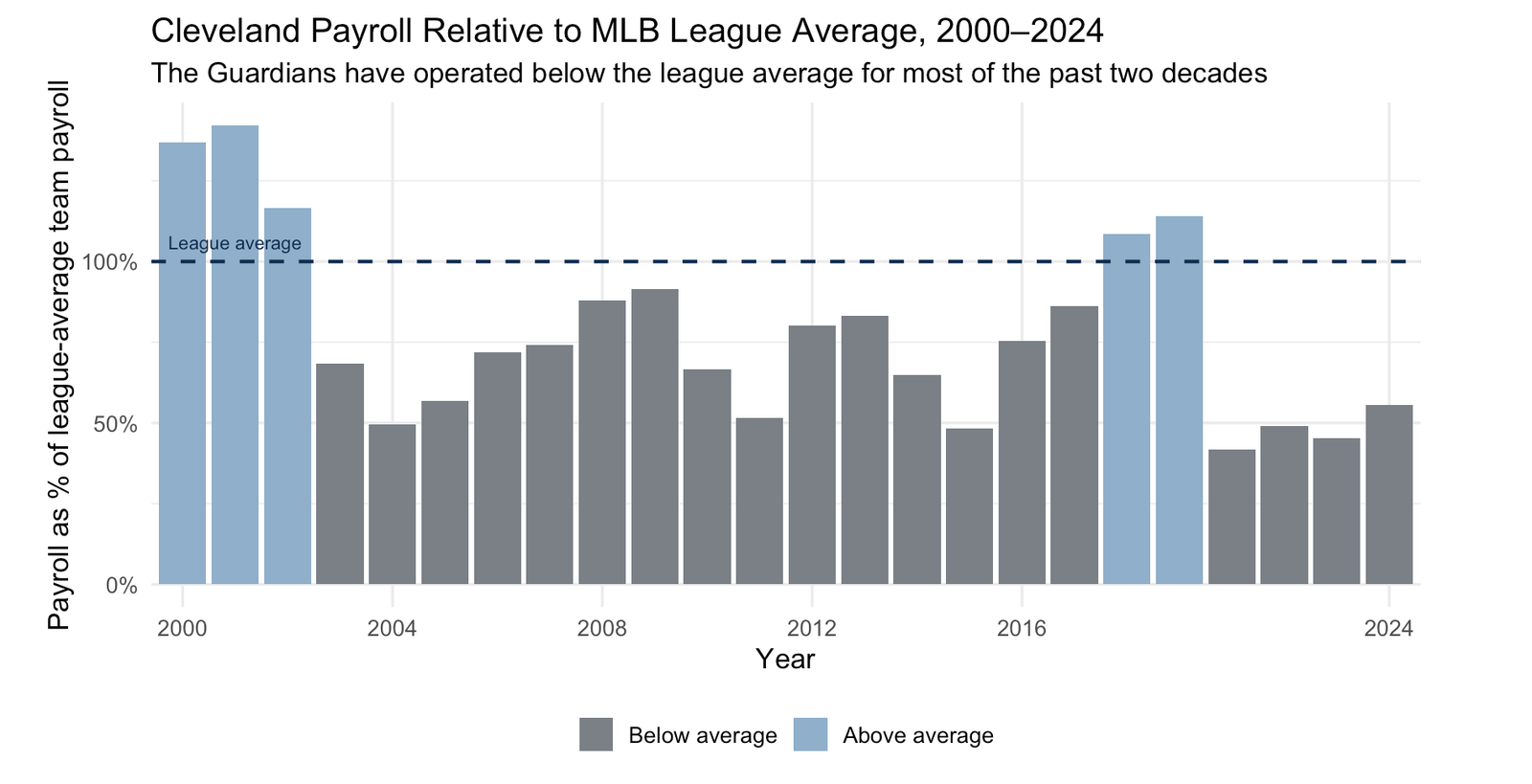
At the start of the sample, when Cleveland spent around or above the league average, attendance was strongest. Once the franchise settled well below that benchmark, attendance settled into a much lower range too. From 2018 to 2024, however, Guardians attendance remained broadly in line with league trends even as team payroll fell from slightly above the league average to roughly 50% below it. Over this period, the team has won three division titles and two playoff series, which could explain why attendance remained stable. These observations do not prove any causal relationship between payroll and attendance, but it seems plausible that fans may respond more to the franchise’s level of demonstrated financial commitment than to the overall rise in MLB fan costs.