Through 26 years of inflation, fluctuating poverty rates, and even a pandemic, America’s federal minimum wage has remained a consistent $7.25 per hour since 2009. While the federal government stays steady, wage standards across the country have become increasingly diverse as state governments have made their own legislative pushes in wake of economic changes. In 2025, the highest state minimum wage is $9.41 above the federal minimum wage, while in 2009, the greatest deviation was only $1.30. The broadened variation of state minimum wages in 2025 allows for valuable comparisons of economic behavior that would not have been possible in previous years. We can analyze this behavior through consumption in an industry that has defined American culture since the 1960s: fast food. A relationship between wage and fast food consumption could begin to reveal whether higher wages actually raise purchasing power, and if so, on what consumers might choose to spend this additional income.
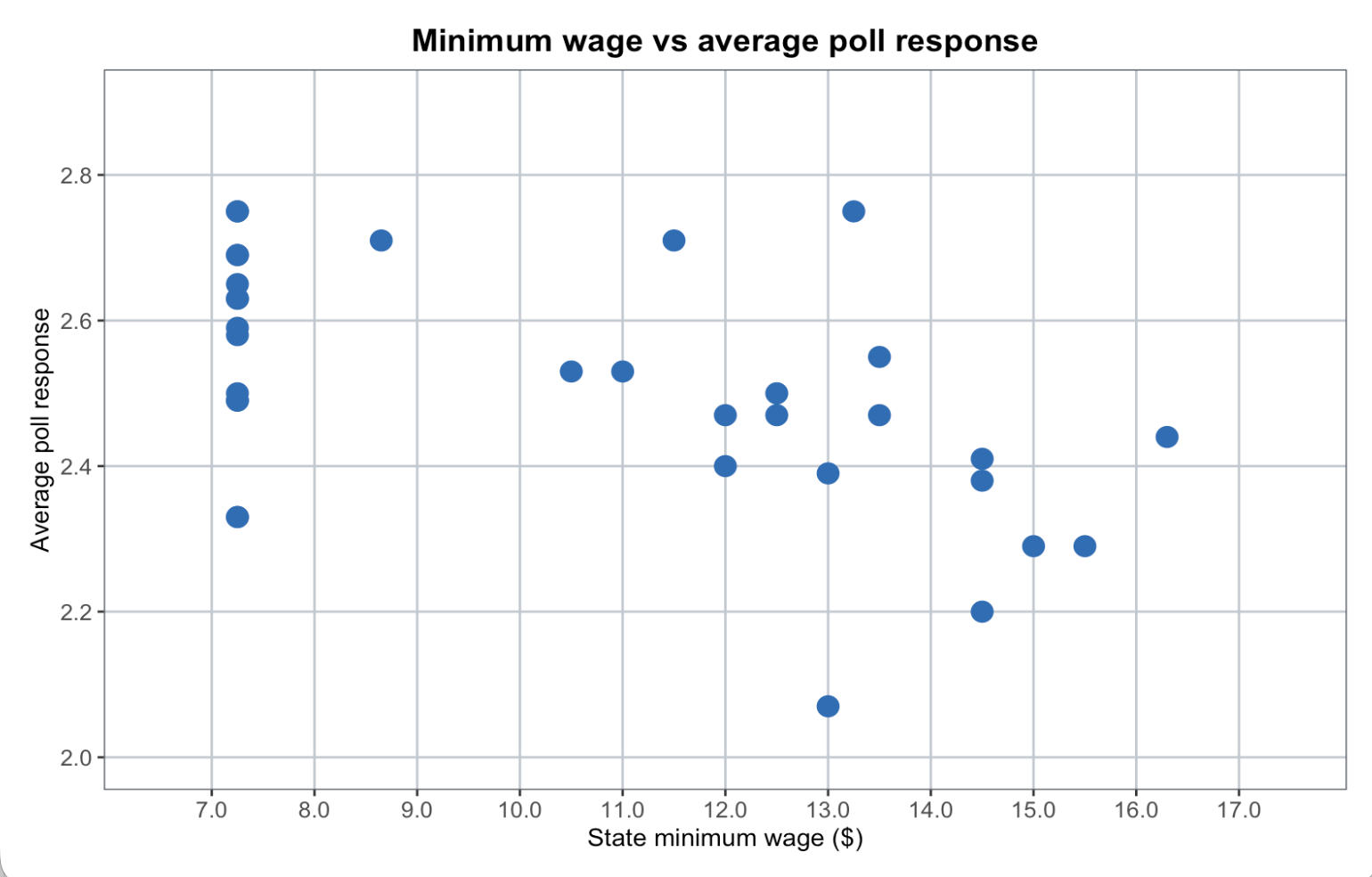
A poll by Civicscience Inc. asked American consumers from 42 US states throughout 2025 how often they ate at “fast food/quick service restaurants (e.g. McDonald’s, KFC, Domino’s),” offering four answer choices: “never,” “less than once a month,” “a few times a month,” and “once a week or more.” Figure 1 assigns level values to each response—1 to “never,” 2 to “less than once a month,” 3 to “a few times a month,” and 4 to “once a week or more”. Each point in the graph represents one state and is located based on the minimum wage of the state in December 2025 and the average response of the state’s consumers.
Twenty US states have a minimum wage of $7.25. In Figure 1, these 20 points alone span a wide range of average fast food consumption, and most states on the higher end of minimum wages fall within the same response range. Still, there seems to be a general fall in fast food consumption from lower minimum wage states to higher minimum wage states. This trend is particularly prevalent if we highlight Alabama and Washington state, the states with the lowest ($7.25) and highest ($16.66) 2025 minimum wages, respectively.
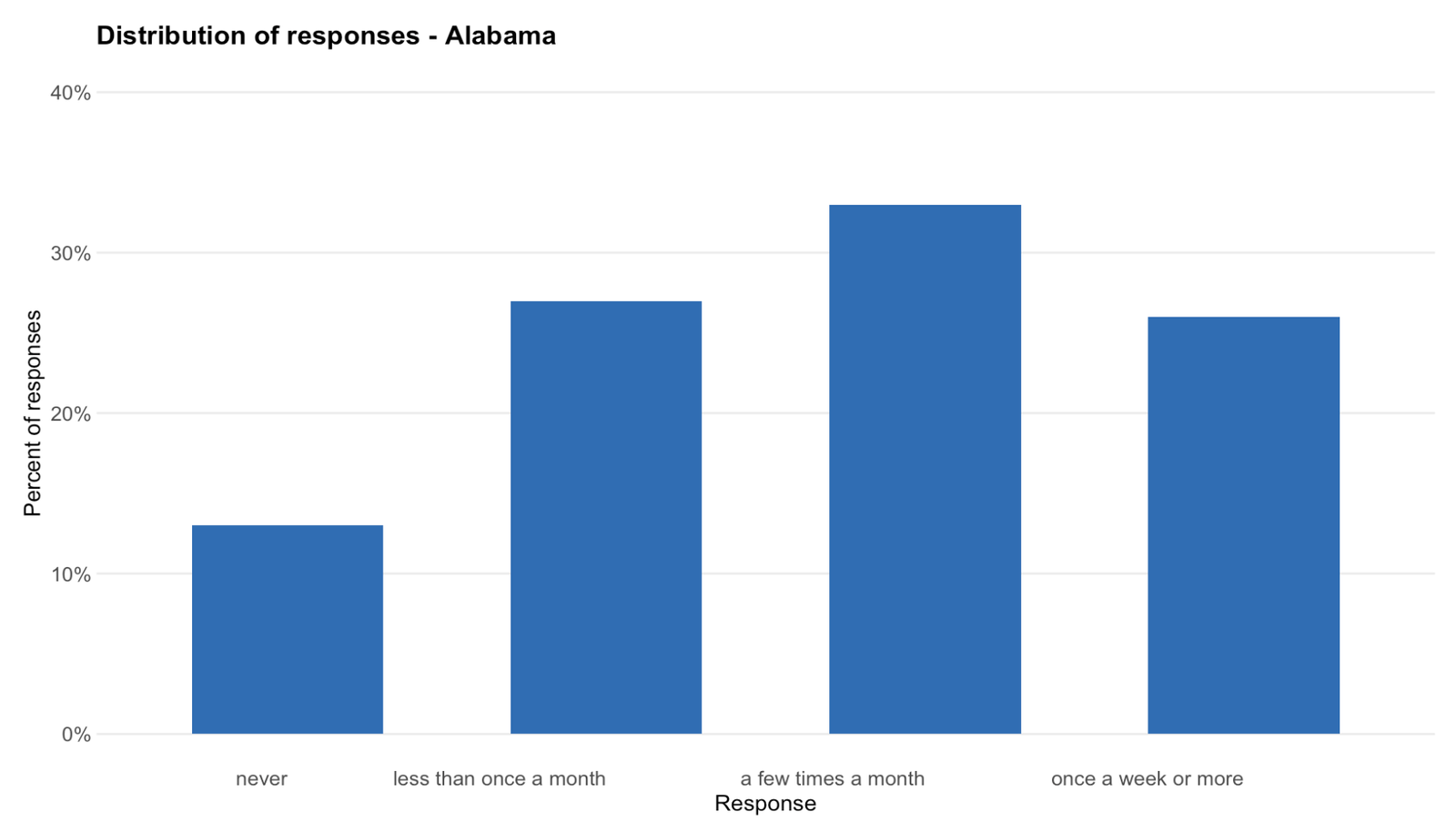
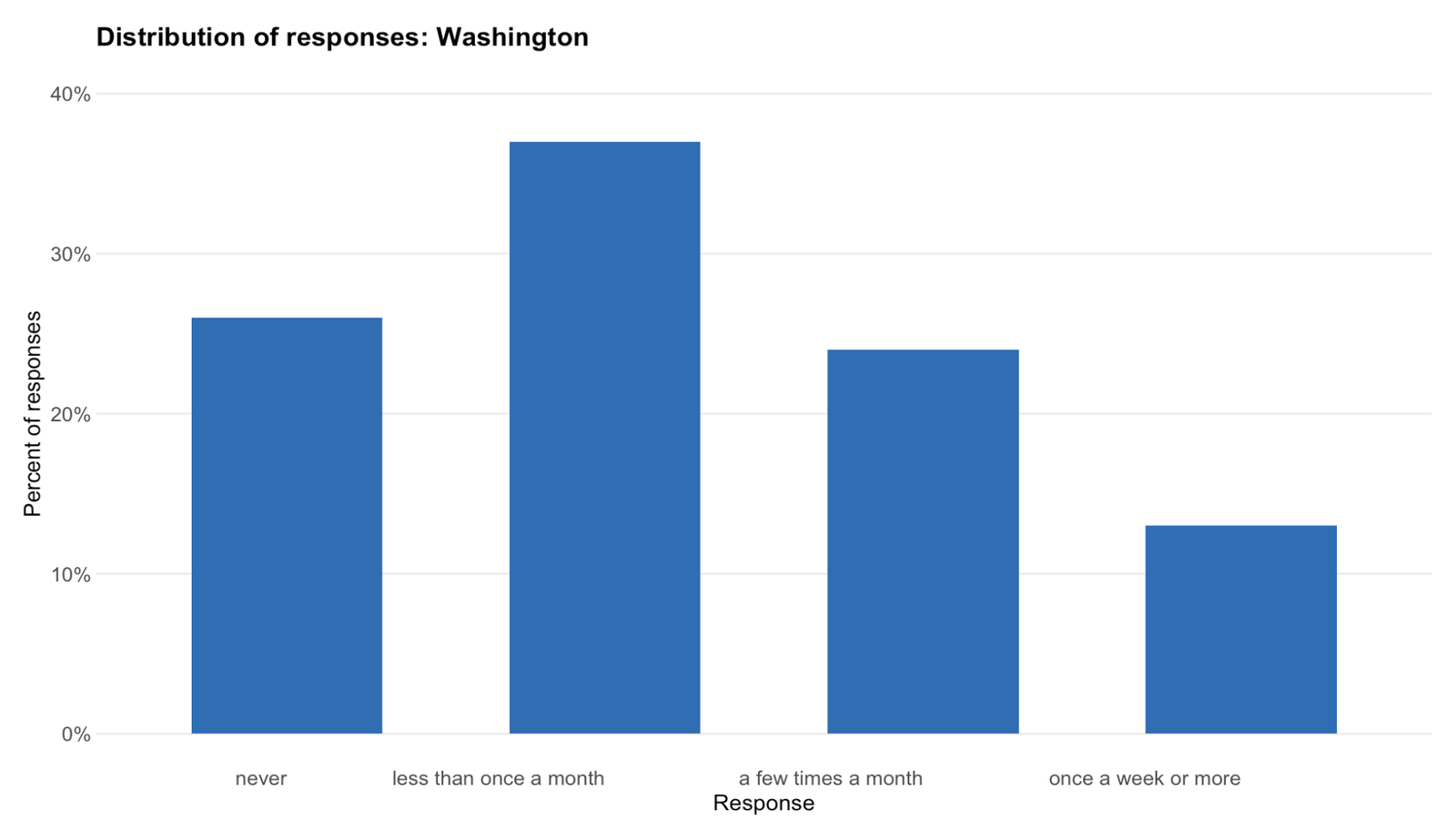
Consumer responses in Alabama are noticeably skewed more toward the upper end of fast food consumption, while responses in Washington are skewed toward the lower end. However, there could be numerous factors at play in the two states that tie to both minimum wage and fast food consumption. For example, Alabama has a significantly greater rural population percentage than Washington, which might suggest that fewer Alabama residents have access to any healthier restaurant or grocery options than the fast food chains in their areas. This concept of a “food desert”—-low-income rural areas with limited availability of nutritious foods—is very prevalent in Southern states like Alabama. Residents of food deserts may choose unhealthy fast food options out of necessity rather than preference. This makes any link between minimum wage and fast food consumption cloudy, as demand for fast food in these areas might be relatively unresponsive to any change in purchasing power that a raised minimum wage could cause.
Nonetheless, the differences in these distributions could hold weight in some disputes over minimum wage. A common concern with raising the minimum wage is that price levels will rise with wages and force consumers to purchase cheaper, less healthy foods. Washington’s distribution compared to lower-wage states could indicate that greater disposable income outweighs the impact of price levels on consumption and diet choices of Americans. In the wake of rising obesity and the boom of GLP-1 drugs in the US, more deeply examining minimum wage shifts over time could offer new insights into consumption and health in the US.